Canadian manufacturing facilities never stop moving. Whether it’s a busy warehouse, a growing production plant, or a large industrial operation, every space relies on systems that are built to last and designed to keep workers safe. That’s where manufacturing assembly solutions come in specialized services that keep equipment aligned, spaces secure, and workplaces organized so operations can run smoothly without unnecessary downtime.
Today, companies across Canada want more than simple setup and installation. They need a partner who understands how to create safer work environments, streamline workflow, and make sure everything meets modern safety expectations. That’s why businesses turn to trusted professional installers who bring experience, precision, and detail-oriented planning into every industrial space.
If you’re looking for expert installation support for manufacturing facilities, WeInstallIt provides dependable assembly solutions designed to fit the unique needs of Canadian industrial environments. Their team handles everything from heavy-equipment installation to structured safety setups across commercial, industrial, and logistics spaces.
Why Manufacturing Assembly Solutions Matter in Canadian Industrial Facilities
Modern manufacturing moves fast, and businesses can’t afford safety issues, workflow interruptions, or disorganized layouts. Proper assembly solutions help companies create streamlined environments where equipment, people, and processes work together safely and efficiently.
Safer Work Environments Through Professional Setup
Industrial operations have many potential hazards: heavy machinery, elevated work areas, fast-moving production lines, and high-traffic team zones. That’s why safety-focused installations play a central role in preventing accidents and creating more secure environments.
Proper assembly means equipment is positioned correctly, barriers are placed strategically, and every component is installed with long-term stability in mind. This results in fewer workplace interruptions, reduced risks, and stronger compliance with industry safety expectations.
Better Workflow and Productivity
A well-organized production floor can significantly increase efficiency. With professional assembly support, equipment is placed in a way that improves movement patterns, reduces bottlenecks, and helps teams work faster and more confidently.
Clear pathways, precise equipment alignment, and optimized layouts encourage smoother operations and higher output. For industrial facilities, these improvements have a direct impact on productivity and overall profitability.
Strong, Reliable Installations Designed to Last
Canadian facilities operate in demanding environments where equipment must be durable, secure, and stable. High-quality manufacturing assembly ensures that every structure from safety barriers to machinery stations is built to withstand daily wear and tear. This not only protects your investment but also helps maintain a predictable and dependable workflow.
Key Components of Manufacturing Assembly Solutions
Professional manufacturing assembly solutions cover a wide range of setup processes tailored to today’s industrial needs. Below are the major components, written in fully expanded detail to match your instruction.
1. Guardrail Installation for Elevated and High-Traffic Areas
Guardrails play a crucial role in keeping people safe around elevated workspaces, mezzanines, open platforms, and dangerous machinery zones. A properly installed guardrail system creates a strong physical barrier that helps prevent falls and accidental entry into restricted spaces.
In manufacturing environments, these guardrails are typically made from durable steel or industrial-grade aluminum, designed to withstand significant force and consistent daily use. Beyond physical strength, the installation process focuses on placement accuracy ensuring every rail is anchored securely into the right structural points. This creates a continuous level of protection without gaps or weak spots.
By integrating guardrail installation into your manufacturing assembly plan, you ensure higher safety standards and long-term security for every team member on the floor.
2. Safety Barrier Setup to Separate Pedestrian and Machinery Zones
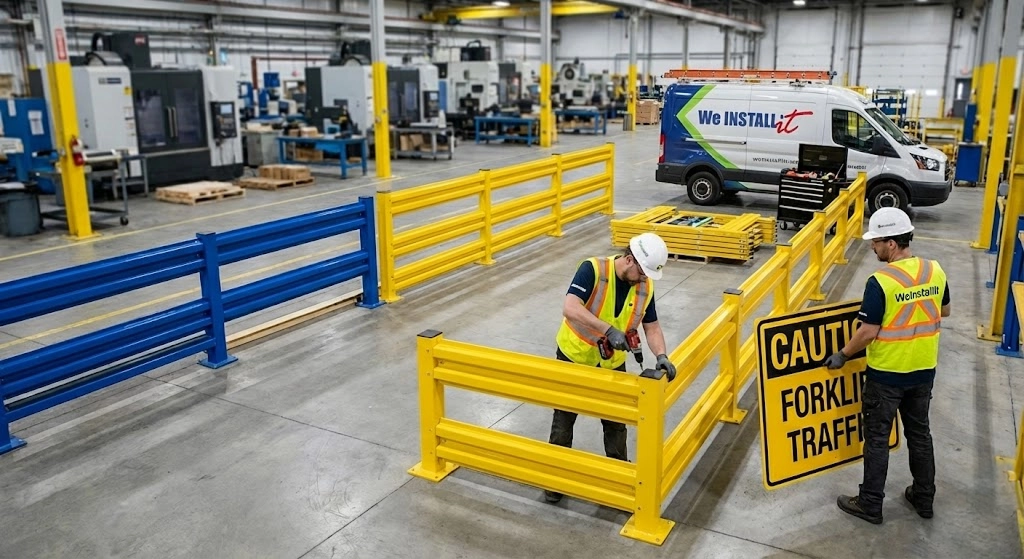
Industrial facilities often have narrow aisles, fast-moving vehicles, robotic systems, and heavy machinery operating simultaneously. Safety barriers help organize these zones by creating defined boundaries that separate workers from machinery paths, forklifts, or automated production lines.
These barriers are built to withstand impact, which is essential in environments where collisions can occur. Their placement is carefully planned to protect both people and equipment without restricting workflow.
Instead of just dropping a line of barriers in place, professional installers study the flow of movement within your space. They identify where traffic patterns naturally cross, determine where visibility may be low, and ensure that every barrier enhances safety without disrupting overall operations.
3. Compliance and Safety Signage for Better Communication and Awareness
Manufacturing facilities rely on clear communication to keep workers aware of risks and instructions. That’s why safety signage is an essential part of every industrial environment.
These signs can include hazard warnings, directional guides, mandatory protective gear notifications, emergency exit indicators, and important equipment instructions. When placed strategically, signage helps guide workers through the space safely, teaches them what to expect in each area, and serves as a continuous reminder of important safety protocols.
Professional installers make sure signs are placed at the correct height, location, and line of sight. This ensures that every message is visible and easy to understand, even from a distance or in fast-paced environments.
4. Equipment Layout, Assembly, and Optimization
One of the most valuable aspects of manufacturing assembly solutions is the ability to optimize equipment placement. Production lines, conveyor systems, workstations, and storage units must be arranged in a way that aligns with workflow priorities.
Professionals assess the facility layout and determine where each piece of equipment will function best. They consider power access, worker movement, safety zones, and the overall production sequence. With proper assembly and placement, you get a well-structured environment that reduces travel time, minimizes congestion, and supports higher output.
Risk Reduction and Workplace Safety: The Core of Every Industrial Setup
Safety is at the heart of every manufacturing assembly solution. Industrial environments involve many moving parts, which means small installation errors can lead to major accidents. Proper safety planning ensures these risks are identified early and addressed before they can impact the workforce.
Professionals inspect every equipment point, look for potential collision or fall hazards, and build solutions that eliminate or greatly reduce these risks. This approach leads to safer workspaces, more confident workers, and better protection for both people and assets.
Why Canadian Companies Choose Professional Assembly Services
Across Canada, industrial businesses prefer professional installers because they deliver more than just a standard setup. They bring specialized expertise, advanced equipment knowledge, and a safety-first approach that ensures every installation meets modern operational expectations.
Higher Accuracy and Reliability
Professional installers understand how to assemble industrial equipment in a way that ensures structural strength, precise alignment, and long-term durability. Their attention to detail results in installations that hold up under the demands of heavy production schedules.
Improved Safety Compliance
Workplace safety is non-negotiable. Professionals know how to set up guardrails, barriers, and signage using methods that support safety compliance and facility inspection requirements. This provides peace of mind and protects your organization from unnecessary risks.
Reduced Downtime and Faster Setup
Industrial facilities can’t afford extended breaks in production. Professional assembly teams complete installations quickly and efficiently, minimizing interruptions and allowing your operations to get back on track sooner.
Maintaining Long-Term Performance and Facility Safety
Manufacturing environments change over time new equipment arrives, production lines shift, and safety requirements evolve. That’s why ongoing maintenance is just as important as the initial installation. Regular inspections help identify issues like loose bolts, weakened barriers, or faded signage before they become major hazards.
By partnering with professionals who understand the importance of long-term safety, you ensure your facility stays compliant, efficient, and ready for growth.
For professional installation support, you can explore the services offered on WeInstallIt.com a trusted resource for commercial and industrial setup solutions across Canada.
Conclusion
Manufacturing assembly solutions are essential for keeping Canadian industrial facilities safe, efficient, and high performing. With expertly installed guardrails, safety barriers, signage, and equipment layouts, businesses can operate confidently while protecting both workers and assets. Professional installers bring the knowledge, precision, and structure needed to create spaces that support long-term productivity and safety.
For more information on professional industrial installation and setup, visit https://weinstallit.com/contact-us/ and explore their comprehensive range of services designed specifically for Canadian manufacturing environments.
Frequently Asked Questions
1. What are manufacturing assembly solutions?
They include professional setup of industrial equipment, guardrails, safety barriers, signage, and optimized layouts designed to improve workflow, safety, and performance in manufacturing spaces.
2. Why do manufacturing facilities need guardrails and safety barriers?
These systems create protective zones that prevent falls, collisions, and accidental entry into dangerous areas, which helps reduce workplace injuries and maintain safety standards.
3. How often should safety systems in a manufacturing facility be inspected?
It’s recommended to perform routine inspections every few months or after any major equipment change to ensure all barriers, rails, and signage remain secure and effective.
4. What role does signage play in manufacturing safety?
Signage communicates important information to workers, such as hazards, required protective equipment, traffic directions, and emergency instructions, helping maintain awareness and compliance.
5. Why should companies use professional assembly services?
Professionals bring experience, precision, and safety expertise that reduce installation errors, ensure compliance, and help facilities operate more efficiently and reliably.